

A well-maintained pair of leather boots can last a decade or longer. A neglected pair can fall apart in two seasons. The difference has almost nothing to do with the original price of the boots and everything to do with how consistently and correctly you care for them. What most people don’t realise is that the most effective leather boot care methods are also the most sustainable ones , natural oils, plant-based conditioners, and simple DIY solutions that have been used for generations outperform many of the chemical-heavy commercial products on the market today.
This guide covers everything you need to know about sustainable leather boot cleaning and maintenance: the science of why leather degrades, the natural products that prevent it, a seasonal care routine, and how to handle specific problems like salt stains, scuffs, and mould without reaching for harsh chemicals.
Why Leather Degrades and Why Most Commercial Products Make It Worse
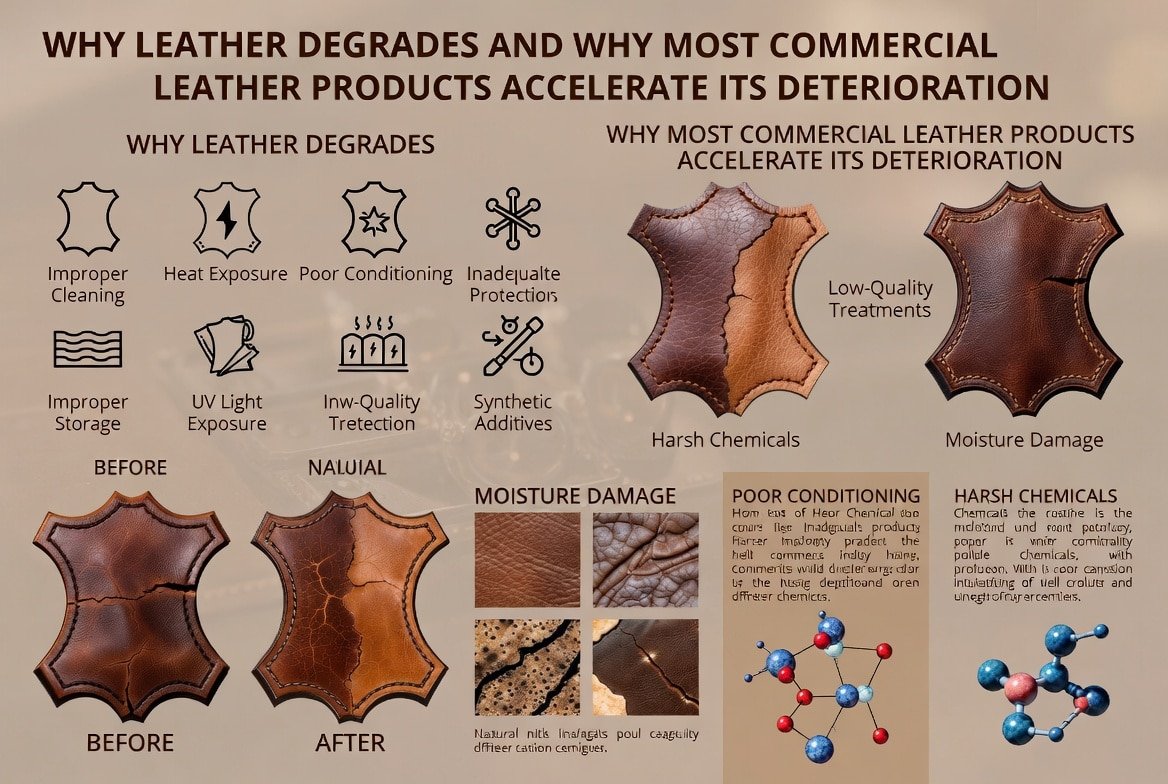
Leather is a natural material made from animal hide that has been tanned and treated to create a durable, flexible surface. At its core, leather is essentially a network of protein fibres , primarily collagen , that need to stay hydrated and supple to maintain their structural integrity. When leather dries out, those fibres become brittle, crack under flexion, and begin to separate. This is what causes the characteristic cracking and peeling that signals a neglected pair of boots.
The problem with many conventional leather care products is that they clean aggressively using chemical solvents that strip away not just dirt but the leather’s natural oils as well. Some silicone-based conditioners create a surface barrier that looks good initially but actually prevents the leather from breathing and accelerates drying from within. The most sustainable approach to leather boot care is also the most effective one: clean gently, condition regularly with natural oils and plant-based products, and protect proactively rather than reactively.
Identifying Your Leather Type Before You Start
Before applying any cleaning or conditioning product , natural or otherwise , it is important to know what type of leather your boots are made from. Different leather finishes respond differently to the same products, and using the wrong approach on the wrong leather type can cause irreversible damage. The most common leather types found in boots fall into four categories, each requiring a slightly different care approach.
- Full-grain leather: the highest quality, most durable leather. The grain surface is intact and shows natural markings. Responds excellently to natural oils and conditioners. Develops a patina over time that improves with age and care.
- Top-grain leather: slightly sanded or buffed to remove imperfections, creating a more uniform surface. Less breathable than full-grain but still responds well to natural conditioning. Avoid heavy oils that can darken the surface unevenly.
- Suede and nubuck: brushed leather with a soft, napped surface. These require completely different care , no oils or conditioners designed for smooth leather. Use only suede-specific brushes and protectors.
- Bonded or synthetic leather: made from leather scraps or entirely synthetic materials. Natural oil conditioning may not absorb properly. If in doubt, test on an inconspicuous area first.
Checking the label inside your boot or the brand’s product page will usually confirm the leather type.
The Sustainable Cleaning Toolkit , What You Actually Need
One of the most liberating aspects of eco-friendly leather boot care is how minimal the toolkit is. You do not need an array of specialist products. A few high-quality, sustainably sourced items cover almost every cleaning and maintenance scenario effectively, and many of the most powerful solutions are already in your kitchen or bathroom cupboard.
Natural Cleaning Agents
For regular cleaning, a solution of mild castile soap , a plant-based soap made from olive oil or coconut oil , diluted in warm water is one of the most effective and gentle leather cleaners available. Apply with a soft cloth or natural-bristle brush using small circular motions, then wipe away with a clean damp cloth. Castile soap has a pH close to neutral, which means it cleans without stripping the leather’s natural oils or disrupting its surface finish. White vinegar diluted with equal parts water is effective for removing salt stains and light mineral deposits , a particularly useful solution for boots worn through winter conditions.
- Castile soap solution: 1 teaspoon castile soap per 250ml warm water. Use on smooth leather only.
- White vinegar dilution: equal parts white vinegar and water. Apply with a soft cloth, wipe clean, then condition immediately after , vinegar can temporarily dry leather.
- Soft natural-bristle brush: an old toothbrush or a dedicated horsehair brush works for seams, welt stitching, and textured surfaces where a cloth cannot reach.
- Microfibre cloths: reusable, lint-free, and gentle on leather surfaces. Avoid paper towels, which can be abrasive.
Natural Conditioning Agents
Conditioning is the most important step in sustainable leather boot maintenance and the one most frequently skipped. After any cleaning , and independently of cleaning, every four to six weeks during regular wear , leather needs to be replenished with oils and fats to keep its fibre network supple. The most effective natural conditioners are those that mimic the oils already present in leather: beeswax-based balms, coconut oil, jojoba oil, neatsfoot oil, and lanolin are all highly effective and widely available without the synthetic additives found in most commercial products.
Coconut oil is particularly worth highlighting because it is both highly accessible and genuinely effective on smooth leather. A small amount , no more than a pea-sized portion per boot , warmed between the fingers and worked into the leather in circular motions restores suppleness and adds a subtle protective layer. The caution with coconut oil is that it can darken lighter-coloured leather slightly, so testing on an inconspicuous area first is always worth the thirty-second investment. Beeswax-based conditioners like traditional leather balm provide conditioning alongside water resistance and are the best all-in-one option for boots regularly exposed to rain or snow.
The Complete Sustainable Leather Boot Cleaning Routine
A consistent, methodical cleaning routine is more valuable than any individual product. The following process covers everything from a quick post-wear refresh to a thorough deep clean, structured in order of frequency so you can integrate it practically into your regular routine rather than treating boot care as an occasional project.
After Every Wear , Two Minutes That Make a Difference
The simplest and most impactful habit in sustainable leather boot care is the two-minute post-wear routine. When you take your boots off, remove them from your feet using a shoehorn to avoid crushing the heel counter, then use a dry horsehair brush or soft cloth to knock away any loose dirt, dust, or debris from the surface and the welt seam at the base. Insert cedar shoe trees immediately , cedar absorbs moisture from the interior, prevents the upper from creasing and losing its shape, and naturally deodorises. This one habit, applied consistently, extends the lifespan of any pair of leather boots more than any product ever will.
- Cedar shoe trees: the single most valuable investment in sustainable leather boot maintenance. Cedar absorbs up to 20% of its weight in moisture. Replace the cedar blocks or lightly sand them with fine-grain sandpaper once a year to reactivate their absorbency.
- Avoid storing boots in plastic bags or airtight containers , leather needs to breathe. A cloth bag or open shelf is ideal.
- Never dry wet leather near a direct heat source like a radiator. Heat dries the fibres rapidly and causes cracking. Air dry at room temperature, away from sunlight.
Weekly Cleaning , Maintaining the Surface
For boots worn regularly, a brief weekly clean prevents surface dirt from becoming embedded in the leather’s grain. Using your castile soap solution and a soft cloth, wipe the entire exterior surface of each boot, paying particular attention to the toe box where scuffs accumulate, the shaft where trouser hems create friction, and the heel edge where road debris tends to build up. After cleaning, wipe away any soap residue with a clean damp cloth and allow to dry completely at room temperature before moving to the conditioning step.
Monthly Conditioning , The Non-Negotiable Step
Conditioning is not optional if you want leather boots to genuinely last. Once a month for boots in regular rotation, apply a thin, even layer of your chosen natural conditioner , beeswax balm, jojoba oil, or a purpose-made natural leather conditioner , using a soft cloth or your fingertips. Work it into the leather in circular motions, covering the entire surface including the heel, the welt seam, and any areas that flex during walking. These flexion points are where leather most commonly cracks first, and regular conditioning prevents the protein fibres from drying out at the exact points where they face the most mechanical stress.
After applying the conditioner, allow the leather to absorb for ten to fifteen minutes, then buff gently with a clean horsehair brush or dry cloth to remove any excess and restore the surface finish. If you are using a beeswax conditioner, a brief pass with the brush generates gentle friction that brings up a natural shine without any chemical polish.
Handling Specific Problems Sustainably
Even with a consistent routine, leather boots encounter specific challenges , salt stains from winter roads, scuffs from daily wear, mold from damp storage, and waterline marks from rain. Each of these has a natural, low-impact solution that avoids the harsh chemicals found in many specialist leather repair products.
- Salt stains: mix equal parts white vinegar and water, apply with a soft cloth in light circular motions, and wipe clean. Follow immediately with conditioning to offset any drying effect from the vinegar.
- Scuffs on smooth leather: a small amount of matching leather conditioner or natural beeswax balm, worked into the scuff with a fingertip, will blend most light surface scratches into the surrounding leather. Deeper gouges may require a colour-matched leather filler available from sustainable shoe care brands.
- Mould or mildew: wipe away surface growth with a cloth dampened in a diluted white vinegar solution, then allow it to dry fully in a well-ventilated area out of direct sunlight. Condition thoroughly after. Mould indicates the boots were stored damp , cedar shoe trees and proper drying before storage to prevent recurrence.
- Waterline marks: allow the boots to dry completely, then apply an even coat of conditioning balm across the entire boot surface , not just the stained area. Conditioning the whole surface prevents the waterline from being visible once the leather has absorbed the product evenly.
Seasonal Maintenance , Preparing Your Boots for What Is Coming
Adapting your leather boot care routine to the season is one of the most practical and underused approaches to extending boot lifespan. Each season places different demands on leather, and addressing those demands proactively prevents the accumulated damage that shortens a pair’s useful life significantly.
Before autumn and winter, when boots will face rain, salt, and cold, apply a thorough treatment of beeswax or carnauba wax conditioner across the entire boot surface. These natural waxes form a water-repellent barrier that is breathable , unlike silicone-based alternatives , and reduces salt penetration significantly. In spring, after winter wear, a deep clean to remove any accumulated salt or grit followed by a generous conditioning treatment rehydrates leather that has been stressed by cold, dry air and repeated wetting. Before summer storage, clean and condition thoroughly, insert cedar shoe trees, and store in a breathable cloth bag away from direct sunlight and heat sources.
Sustainable Product Recommendations , What to Look for When Buying
For those who prefer a commercially produced product alongside their natural DIY options, the sustainable leather boot care market has grown substantially. When evaluating any leather care product for sustainability credentials, look for plant-based or food-grade ingredients (beeswax, carnauba wax, lanolin, jojoba, coconut oil), packaging that is recycled, recyclable, or compostable, and the absence of volatile organic compounds (VOCs), silicones, and petroleum derivatives on the ingredient list.
- Saphir Medaille d’Or products: widely considered the benchmark for quality leather care, using traditional formulations based on natural waxes and oils. Higher price point, but highly concentrated , a small tin lasts considerably longer than most alternatives.
- Otter Wax: a plant-based, beeswax-free leather conditioner and fabric wax made from sustainable carnauba wax, plant oils, and plant-based emulsifiers. Packaged plastic-free.
- Leather Honey: a food-grade leather conditioner with a simple, transparent ingredient list. No solvents, no silicones, available in a range of sustainable packaging options.
- DIY beeswax balm: melt equal parts beeswax and coconut oil together, allow to set, and use as an all-in-one conditioner and protector. Costs a fraction of commercial products and is fully natural.
Final Thought , The Most Sustainable Boot Is the One You Already Own
The most powerful sustainable fashion decision you can make with footwear is not the next purchase , it is how you treat what you already have. A pair of quality leather boots maintained consistently with natural, low-impact methods will outlast five pairs of poorly cared-for replacements. Every year those boots remain in good condition is a year you are not contributing to the demand that drives leather production, packaging waste, and transportation emissions associated with new footwear.
Sustainable leather boot care is not complicated, expensive, or time-consuming. It requires perhaps ten minutes a week, a handful of natural products that cost less than a single bottle of conventional shoe polish, and the habit of caring for your things as if they are meant to last , because the best leather boots genuinely are. Start with cedar shoe trees, a castile soap solution, and a natural conditioning balm. Those three things alone will transform the lifespan and appearance of any pair of leather boots you own.
A well-maintained pair of leather boots can last a decade or longer. A neglected pair can fall apart in two seasons. The difference has almost nothing to do with the original price of the boots and everything to do with how consistently and correctly you care for them. What most people don’t realise is that the most effective leather boot care methods are also the most sustainable ones , natural oils, plant-based conditioners, and simple DIY solutions that have been used for generations outperform many of the chemical-heavy commercial products on the market today.
This guide covers everything you need to know about sustainable leather boot cleaning and maintenance: the science of why leather degrades, the natural products that prevent it, a seasonal care routine, and how to handle specific problems like salt stains, scuffs, and mould without reaching for harsh chemicals.
Why Leather Degrades and Why Most Commercial Products Make It Worse
Leather is a natural material made from animal hide that has been tanned and treated to create a durable, flexible surface. At its core, leather is essentially a network of protein fibres , primarily collagen , that need to stay hydrated and supple to maintain their structural integrity. When leather dries out, those fibres become brittle, crack under flexion, and begin to separate. This is what causes the characteristic cracking and peeling that signals a neglected pair of boots.
The problem with many conventional leather care products is that they clean aggressively using chemical solvents that strip away not just dirt but the leather’s natural oils as well. Some silicone-based conditioners create a surface barrier that looks good initially but actually prevents the leather from breathing and accelerates drying from within. The most sustainable approach to leather boot care is also the most effective one: clean gently, condition regularly with natural oils and plant-based products, and protect proactively rather than reactively.
Identifying Your Leather Type Before You Start
Before applying any cleaning or conditioning product , natural or otherwise , it is important to know what type of leather your boots are made from. Different leather finishes respond differently to the same products, and using the wrong approach on the wrong leather type can cause irreversible damage. The most common leather types found in boots fall into four categories, each requiring a slightly different care approach.
- Full-grain leather: the highest quality, most durable leather. The grain surface is intact and shows natural markings. Responds excellently to natural oils and conditioners. Develops a patina over time that improves with age and care.
- Top-grain leather: slightly sanded or buffed to remove imperfections, creating a more uniform surface. Less breathable than full-grain but still responds well to natural conditioning. Avoid heavy oils that can darken the surface unevenly.
- Suede and nubuck: brushed leather with a soft, napped surface. These require completely different care , no oils or conditioners designed for smooth leather. Use only suede-specific brushes and protectors.
- Bonded or synthetic leather: made from leather scraps or entirely synthetic materials. Natural oil conditioning may not absorb properly. If in doubt, test on an inconspicuous area first.
Checking the label inside your boot or the brand’s product page will usually confirm the leather type.
The Sustainable Cleaning Toolkit , What You Actually Need
One of the most liberating aspects of eco-friendly leather boot care is how minimal the toolkit is. You do not need an array of specialist products. A few high-quality, sustainably sourced items cover almost every cleaning and maintenance scenario effectively, and many of the most powerful solutions are already in your kitchen or bathroom cupboard.
Natural Cleaning Agents
For regular cleaning, a solution of mild castile soap , a plant-based soap made from olive oil or coconut oil , diluted in warm water is one of the most effective and gentle leather cleaners available. Apply with a soft cloth or natural-bristle brush using small circular motions, then wipe away with a clean damp cloth. Castile soap has a pH close to neutral, which means it cleans without stripping the leather’s natural oils or disrupting its surface finish. White vinegar diluted with equal parts water is effective for removing salt stains and light mineral deposits , a particularly useful solution for boots worn through winter conditions.
- Castile soap solution: 1 teaspoon castile soap per 250ml warm water. Use on smooth leather only.
- White vinegar dilution: equal parts white vinegar and water. Apply with a soft cloth, wipe clean, then condition immediately after , vinegar can temporarily dry leather.
- Soft natural-bristle brush: an old toothbrush or a dedicated horsehair brush works for seams, welt stitching, and textured surfaces where a cloth cannot reach.
- Microfibre cloths: reusable, lint-free, and gentle on leather surfaces. Avoid paper towels, which can be abrasive.
Natural Conditioning Agents
Conditioning is the most important step in sustainable leather boot maintenance and the one most frequently skipped. After any cleaning , and independently of cleaning, every four to six weeks during regular wear , leather needs to be replenished with oils and fats to keep its fibre network supple. The most effective natural conditioners are those that mimic the oils already present in leather: beeswax-based balms, coconut oil, jojoba oil, neatsfoot oil, and lanolin are all highly effective and widely available without the synthetic additives found in most commercial products.
Coconut oil is particularly worth highlighting because it is both highly accessible and genuinely effective on smooth leather. A small amount , no more than a pea-sized portion per boot , warmed between the fingers and worked into the leather in circular motions restores suppleness and adds a subtle protective layer. The caution with coconut oil is that it can darken lighter-coloured leather slightly, so testing on an inconspicuous area first is always worth the thirty-second investment. Beeswax-based conditioners like traditional leather balm provide conditioning alongside water resistance and are the best all-in-one option for boots regularly exposed to rain or snow.
The Complete Sustainable Leather Boot Cleaning Routine
A consistent, methodical cleaning routine is more valuable than any individual product. The following process covers everything from a quick post-wear refresh to a thorough deep clean, structured in order of frequency so you can integrate it practically into your regular routine rather than treating boot care as an occasional project.
After Every Wear , Two Minutes That Make a Difference
The simplest and most impactful habit in sustainable leather boot care is the two-minute post-wear routine. When you take your boots off, remove them from your feet using a shoehorn to avoid crushing the heel counter, then use a dry horsehair brush or soft cloth to knock away any loose dirt, dust, or debris from the surface and the welt seam at the base. Insert cedar shoe trees immediately , cedar absorbs moisture from the interior, prevents the upper from creasing and losing its shape, and naturally deodorises. This one habit, applied consistently, extends the lifespan of any pair of leather boots more than any product ever will.
- Cedar shoe trees: the single most valuable investment in sustainable leather boot maintenance. Cedar absorbs up to 20% of its weight in moisture. Replace the cedar blocks or lightly sand them with fine-grain sandpaper once a year to reactivate their absorbency.
- Avoid storing boots in plastic bags or airtight containers , leather needs to breathe. A cloth bag or open shelf is ideal.
- Never dry wet leather near a direct heat source like a radiator. Heat dries the fibres rapidly and causes cracking. Air dry at room temperature, away from sunlight.
Weekly Cleaning , Maintaining the Surface
For boots worn regularly, a brief weekly clean prevents surface dirt from becoming embedded in the leather’s grain. Using your castile soap solution and a soft cloth, wipe the entire exterior surface of each boot, paying particular attention to the toe box where scuffs accumulate, the shaft where trouser hems create friction, and the heel edge where road debris tends to build up. After cleaning, wipe away any soap residue with a clean damp cloth and allow to dry completely at room temperature before moving to the conditioning step.
Monthly Conditioning , The Non-Negotiable Step
Conditioning is not optional if you want leather boots to genuinely last. Once a month for boots in regular rotation, apply a thin, even layer of your chosen natural conditioner , beeswax balm, jojoba oil, or a purpose-made natural leather conditioner , using a soft cloth or your fingertips. Work it into the leather in circular motions, covering the entire surface including the heel, the welt seam, and any areas that flex during walking. These flexion points are where leather most commonly cracks first, and regular conditioning prevents the protein fibres from drying out at the exact points where they face the most mechanical stress.
After applying the conditioner, allow the leather to absorb for ten to fifteen minutes, then buff gently with a clean horsehair brush or dry cloth to remove any excess and restore the surface finish. If you are using a beeswax conditioner, a brief pass with the brush generates gentle friction that brings up a natural shine without any chemical polish.
Handling Specific Problems Sustainably
Even with a consistent routine, leather boots encounter specific challenges , salt stains from winter roads, scuffs from daily wear, mold from damp storage, and waterline marks from rain. Each of these has a natural, low-impact solution that avoids the harsh chemicals found in many specialist leather repair products.
- Salt stains: mix equal parts white vinegar and water, apply with a soft cloth in light circular motions, and wipe clean. Follow immediately with conditioning to offset any drying effect from the vinegar.
- Scuffs on smooth leather: a small amount of matching leather conditioner or natural beeswax balm, worked into the scuff with a fingertip, will blend most light surface scratches into the surrounding leather. Deeper gouges may require a colour-matched leather filler available from sustainable shoe care brands.
- Mould or mildew: wipe away surface growth with a cloth dampened in a diluted white vinegar solution, then allow it to dry fully in a well-ventilated area out of direct sunlight. Condition thoroughly after. Mould indicates the boots were stored damp , cedar shoe trees and proper drying before storage to prevent recurrence.
- Waterline marks: allow the boots to dry completely, then apply an even coat of conditioning balm across the entire boot surface , not just the stained area. Conditioning the whole surface prevents the waterline from being visible once the leather has absorbed the product evenly.
Seasonal Maintenance , Preparing Your Boots for What Is Coming
Adapting your leather boot care routine to the season is one of the most practical and underused approaches to extending boot lifespan. Each season places different demands on leather, and addressing those demands proactively prevents the accumulated damage that shortens a pair’s useful life significantly.
Before autumn and winter, when boots will face rain, salt, and cold, apply a thorough treatment of beeswax or carnauba wax conditioner across the entire boot surface. These natural waxes form a water-repellent barrier that is breathable , unlike silicone-based alternatives , and reduces salt penetration significantly. In spring, after winter wear, a deep clean to remove any accumulated salt or grit followed by a generous conditioning treatment rehydrates leather that has been stressed by cold, dry air and repeated wetting. Before summer storage, clean and condition thoroughly, insert cedar shoe trees, and store in a breathable cloth bag away from direct sunlight and heat sources.
Sustainable Product Recommendations , What to Look for When Buying
For those who prefer a commercially produced product alongside their natural DIY options, the sustainable leather boot care market has grown substantially. When evaluating any leather care product for sustainability credentials, look for plant-based or food-grade ingredients (beeswax, carnauba wax, lanolin, jojoba, coconut oil), packaging that is recycled, recyclable, or compostable, and the absence of volatile organic compounds (VOCs), silicones, and petroleum derivatives on the ingredient list.
- Saphir Medaille d’Or products: widely considered the benchmark for quality leather care, using traditional formulations based on natural waxes and oils. Higher price point, but highly concentrated , a small tin lasts considerably longer than most alternatives.
- Otter Wax: a plant-based, beeswax-free leather conditioner and fabric wax made from sustainable carnauba wax, plant oils, and plant-based emulsifiers. Packaged plastic-free.
- Leather Honey: a food-grade leather conditioner with a simple, transparent ingredient list. No solvents, no silicones, available in a range of sustainable packaging options.
- DIY beeswax balm: melt equal parts beeswax and coconut oil together, allow to set, and use as an all-in-one conditioner and protector. Costs a fraction of commercial products and is fully natural.
Final Thought , The Most Sustainable Boot Is the One You Already Own
The most powerful sustainable fashion decision you can make with footwear is not the next purchase , it is how you treat what you already have. A pair of quality leather boots maintained consistently with natural, low-impact methods will outlast five pairs of poorly cared-for replacements. Every year those boots remain in good condition is a year you are not contributing to the demand that drives leather production, packaging waste, and transportation emissions associated with new footwear.
Sustainable leather boot care is not complicated, expensive, or time-consuming. It requires perhaps ten minutes a week, a handful of natural products that cost less than a single bottle of conventional shoe polish, and the habit of caring for your things as if they are meant to last , because the best leather boots genuinely are. Start with cedar shoe trees, a castile soap solution, and a natural conditioning balm. Those three things alone will transform the lifespan and appearance of any pair of leather boots you own.