The Problem With Plus-Size Donations
Updated: 03 Mar 2026
Donating clothing is a generous act, but for anyone clearing out an extended-size wardrobe, there is a frustrating and rarely discussed reality: many standard donation channels do not serve plus-size recipients well. Thrift stores accept plus-size clothes but cannot guarantee those items will reach people who need them. General clothing drives are almost always dominated by standard sizes, leaving shelters and programs perpetually short of clothing that fits larger bodies.
The practical result is that women in shelters, workforce re-entry programs, and transitional housing who wear sizes 14W and above are often unable to find clothes that fit from donated stock. Multiple Dress for Success affiliates have publicly named plus-size professional attire as their most critical donation shortage. Rose Haven, a women’s shelter in Portland, Oregon, explicitly lists sizes 3X and above as a priority need. The gap is real and well-documented.
This guide is written for the specific intent of donating plus-size clothing to places where it will directly help someone. It covers organizations that actively need extended sizes, how to donate to each, what to do if you want your donation to go to the right place, and how to prepare your clothes before donating so they are actually usable.
Quick Reference: Where to Donate at a Glance
The table below summarizes all major options covered in this guide. Detailed profiles of each organization follow.
| Organization | Type | Plus-Size Policy | Reach | How to Give |
|---|---|---|---|---|
| Dress for Success | Non-profit | Actively seeks plus sizes 14W+; many affiliates call it high-need | Yes (150+ cities) | Drop-off or mail |
| Goodwill | Thrift/charity | Accepts all sizes; no plus-size guarantee for resale | Yes (nationwide) | Drop-off |
| Salvation Army | Thrift/charity | Accepts all sizes | Yes (nationwide) | Drop-off / pickup |
| Women Giving Back | Non-profit | Explicitly serves women in shelters; all sizes needed | DMV area | Drop-off |
| Local women’s shelters | Direct service | Urgent need; plus sizes often the scarcest donation | Local | Call first |
| thredUP | Online resale | Accepts plus-size women’s clothing; lists under curve section | Online / US | Mail-in kit |
| Poshmark | Online resale | Seller lists own plus-size items; thriving plus-size market | Online / US | List & ship yourself |
| Bottomless Closet | Non-profit | Specifically requests sizes 18–30 | NYC metro | Drop-off or mail |
| Rose Haven | Women’s shelter | Explicitly lists plus-size (3X+) as needed item | Portland, OR | Drop-off (Thursdays) |
| Local YWCA | Non-profit | Many locations serve DV survivors; all sizes welcomed | National network | Contact local branch |
Who Actually Receives Your Plus-Size Donation
Understanding who benefits from your donation helps you choose where to give. The scarcity of plus-size clothing in the donated supply affects specific populations more than others.
| Who Receives Your Donation | Why Plus Sizes Are Especially Needed Here |
|---|---|
| Domestic violence shelters | Women leaving abusive situations often arrive with nothing. Plus sizes are among the most under-donated items; many women in these situations cannot find clothes that fit from standard donations. |
| Homeless women’s shelters | Women experiencing homelessness face the same scarcity of extended sizes. Rose Haven (Portland, OR) explicitly lists 3X and above as a priority need. |
| Workforce re-entry programs | Organizations like Dress for Success help women returning to work after hardship. Multiple affiliates have publicly listed plus-size professional attire (sizes 16–30) as their most critical shortage. |
| Refugee assistance programs | Newly arrived refugees depend on donated clothing. Plus sizes are consistently underrepresented in the average donated clothing pool. |
| Transitional housing programs | People moving from shelter to stable housing need functional, everyday clothing. Plus-size wardrobes are rarely covered by typical donation drives. |
| Recovery and sober living homes | Residents rebuilding their lives benefit from donated clothing. These organizations have limited budgets and depend entirely on donations. |
Non-Profits That Actively Seek Plus-Size Donations
These organizations actively seek extended sizes because plus-size professional clothing remains one of the most consistently under-donated categories.
Dress for Success
Dress for Success is an international non-profit that provides professional attire and career development support to women entering or re-entering the workforce. It operates through a network of more than 150 affiliate locations across the US and internationally, each independently managed with its own donation needs.
What makes Dress for Success exceptional for plus-size donors is a documented, specific need. Multiple affiliate locations have published explicit requests for plus-size professional clothing. Dress for Success New Orleans requests sizes 18W and up and 2X to 5X. Dress for Success Southern Nevada specifically needs business attire in sizes 16 to 24. Dress for Success Houston lists plus-sized professional attire as a high-need item. Dress for Success River Cities states that sizes 18 and above represent their greatest need.
This pattern is not coincidental. Workforce re-entry programs serve a broad population, and plus-size clients are consistently underserved by donated inventory. Professional clothing in extended sizes is also expensive to buy new, making donations especially impactful.
Bottomless Closet (New York City)
Bottomless Closet is a New York City-based non-profit that helps women enter the workforce and achieve economic independence. Unlike many general clothing donation organizations, Bottomless Closet is specific about what it needs: plus-size women’s professional clothing, specifically in sizes 18 to 30. It also requests shoe sizes 7 to 10 and above, including half sizes.
For donors in the New York tristate area, drop-off is available at their location during posted hours. For donors outside the area, clothing can be mailed directly to their address. Bottomless Closet also accepts organized donation drives, making it a strong option for workplaces or community groups with large quantities to donate.
Women Giving Back (DMV Area)
Women Giving Back is a non-profit serving the Washington DC, Maryland, and Virginia region. It operates a boutique-style clothing distribution program for women and children in crisis , primarily those living in shelters or transitional programs. Clients are referred through case managers and social workers, and many arrive with only the clothes they are wearing.
The organization accepts clothing, shoes, and accessories for women and children at no cost to recipients. Because its clients come directly from shelters and crisis situations, practical, everyday plus-size clothing is particularly valuable. The boutique format means donated items are treated with dignity and recipients can select what they actually need and want.
Women’s Shelters and Crisis Organizations
For donors seeking immediate impact, local women’s shelters are often the most effective and meaningful place to contribute plus-size clothing.
Why Shelters Are the Most Direct Option
Women’s shelters , including domestic violence shelters, homeless women’s shelters, and transitional housing programs , are often the fastest and most direct way to ensure that plus-size clothing reaches someone who needs it immediately. Unlike thrift stores, clothing donated directly to a shelter goes directly to residents. There is no middleman, no sorting center, and no risk that your donation ends up in a landfill or sold overseas.
The challenge is that shelters vary enormously in what they can accept, how much they can store, and when they accept donations. Always contact your local shelter before showing up with clothing. Most have specific guidelines, scheduled drop-off times, and storage limits.
Rose Haven (Portland, OR)
Rose Haven is a day shelter for women, children, and gender-diverse individuals experiencing homelessness and housing instability in Portland, Oregon. Its publicly available donation page explicitly lists plus-size clothing (3X and above) as a needed item alongside bras, comfortable shoes, and warm coats. The organization also maintains an Amazon Wish List for specific high-need items.
Local Domestic Violence Shelters
Domestic violence shelters across the country consistently cite plus-size clothing as one of the most difficult items to keep stocked. Women who leave abusive situations frequently do so with nothing and need a complete wardrobe. Because donation drives historically over-represent standard sizes, plus-size recipients are routinely left without options.
To find your local domestic violence shelter, search the National Domestic Violence Hotline (thehotline.org) or use the DomesticShelters.org directory. When you call, ask specifically whether they currently need extended sizes and what size range is most scarce. Many will be immediately grateful for the inquiry.
YWCA Locations
The YWCA operates a national network of local organizations focused on empowering women and eliminating racism. Many local YWCA chapters run domestic violence programs, transitional housing, and clothing assistance programs. Because the YWCA is community-based, policies and needs vary significantly by location. Contact your local YWCA through ywca.org/find-your-ywca to ask what they currently accept and whether plus-size clothing is a priority.
Working Wardrobes (Southern California)
Working Wardrobes is a Southern California non-profit that helps people facing difficult challenges , including domestic violence, incarceration, homelessness, and military transition , re-enter the workforce. The organization accepts professional and work-appropriate clothing donations and serves clients across a wide size range. If you are in the Southern California area with plus-size professional or work attire to donate, Working Wardrobes is a strong local option.
Goodwill and the Salvation Army: What to Know
While widely accessible and convenient, these organizations operate on a resale model that makes the impact of specific size donations less direct.
The Honest Assessment
Goodwill and the Salvation Army are the two most visible clothing donation destinations in the United States. Both accept plus-size clothing without restriction. However, neither organization can guarantee that donated plus-size clothing will reach plus-size people in need , items are sold in thrift stores, and shoppers buy what they find. The donations still support community programs, job training, and social services, but the clothing path is indirect.
For donors whose primary goal is to ensure plus-size clothing goes to plus-size individuals in crisis, Goodwill and the Salvation Army are less targeted options than direct donations to shelters, Dress for Success affiliates, or programs like Bottomless Closet. For donors who want a convenient option that still benefits community programs and reduces textile waste, they remain good choices.
Online Resale as an Alternative
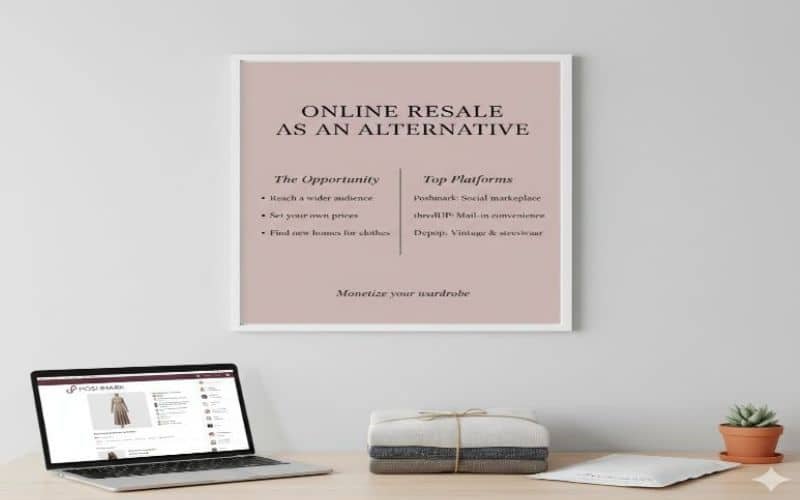
If direct donation is not possible, or if your plus-size clothing is in excellent condition and you want it to reach someone who can choose it themselves, online resale platforms are a strong alternative. Plus-size clothing is in high demand on secondhand platforms, and proceeds from sales can be donated to organizations of your choice.
thredUP
thredUP is an online consignment and secondhand platform that accepts plus-size women’s clothing as part of its standard intake. The process is mail-in: you request a Clean Out Kit, fill it with gently used clothing, and ship it back. thredUP inspects each item, lists what it can sell, and donates what it cannot. For clothing it does sell, you can receive a cash payout or direct a donation to a charitable partner.
thredUP accepts everyday brands , Gap, Old Navy, Lane Bryant, Torrid, Eloquii, and similar , making it suitable for most donated plus-size wardrobes. The platform has a dedicated curve/plus-size section with active shoppers. Keep in mind that thredUP accepts approximately 40% of submitted items on average; items that do not meet quality standards are recycled or donated.
Poshmark
Poshmark is a peer-to-peer selling platform where you list your own items, set your own prices, and ship directly to buyers. It requires more effort than thredUP, but you keep more of the sale price and have complete control over how your items are priced and described. Plus-size clothing has a thriving community on Poshmark, where buyers actively search for extended sizes and the market is strong for both casual and professional extended-size pieces.
After selling items, you can donate proceeds to organizations of your choice. Poshmark also runs occasional charitable campaigns that allow sellers to designate a portion of sales to specific non-profits.
How to Prepare Your Donation
The condition in which clothes arrive at a shelter or non-profit directly determines whether they can be used. Organizations that serve people in crisis often have very limited volunteer hours for sorting, cleaning, or repairing items. Clothing that arrives unusable wastes those hours and typically goes straight to landfill.
The checklist below covers everything you need to do before donating plus-size clothing to ensure it reaches someone rather than a dumpster.
| Step | Why It Matters |
|---|---|
| Wash or dry-clean everything | No organization will distribute clothes that smell or have stains. This is the single most important step. |
| Check for damage | Inspect zippers, buttons, seams, and hems. Donating broken items wastes the organization’s volunteer time and often goes straight to landfill. |
| Leave size tags intact | Plus-size recipients depend on tags to find the right fit. If a tag has been removed, the garment is much less useful to a donation org. |
| Keep items in season | Shelters and non-profits typically can’t store off-season clothing. Donate summer clothes in spring, winter coats in fall. |
| Bag or box neatly | Many organizations specify: no trash bags, no loose piles. Fold neatly in boxes or shopping bags, or hang on hangers if requested. |
| Call ahead for plus sizes | Some orgs have storage limits. A quick call confirms they are currently accepting your size range and saves a wasted trip. |
| Get a tax receipt | If donating to a 501(c)(3), request a receipt and write down an estimated value per item for your records. You may be able to deduct the fair market value. |
Finding Your Local Plus-Size Donation Option
Not every option in this guide is national. Here is how to find the best local destination for your plus-size donation:
- Search for a Dress for Success affiliate near you at dressforsuccess.org. Click “Find Your Local Affiliate,” select your state, and check the affiliate’s donation page for their specific size needs and current intake status.
- Search DomesticShelters.org for domestic violence shelters in your area. Call the shelter and ask whether they currently need plus-size clothing and what sizes are most scarce.
- Find your local YWCA at ywca.org/find-your-ywca and ask whether they run a clothing assistance program and what sizes they need.
- Search Google for “[your city] women’s shelter clothing donation” and call two or three results. Mention specifically that you have plus-size clothing to donate. The response you receive will tell you quickly which organization will use it best.
- If you are a member of a local faith community, social organization, or workplace, consider organizing a plus-size clothing drive specifically targeting sizes 1X and above. Framing the drive around extended sizes creates a targeted collection that stands out from the typical donation drive.
What Not to Donate
Every organization mentioned in this guide manages limited volunteer time and storage space. Donating items that cannot be used creates real operational costs. Across every organization above, the following categories are consistently declined or create problems:
- Clothing with stains, visible damage, broken zippers, or missing buttons. If you would not give it to a friend, do not donate it.
- Used socks, underwear, or tights. Most organizations cannot accept used intimate items for hygiene reasons. New underwear and socks in sealed packaging, however, are almost always welcomed.
- Heavily worn or pilled knits. Pilling is often overlooked by donors but is immediately visible to recipients and signals “worn out” rather than “donated.”
- Items missing size labels. Especially critical for plus-size donations, where recipients need to know what they are grabbing from a rack or bin.
- Out-of-season items donated at the wrong time. A heavy winter coat donated in July creates a storage burden for organizations with no space.
- Large unannounced drops at shelters. Showing up at a shelter with ten bags of clothing without calling ahead first is disruptive and often means your donation cannot be accepted. Always call first.
Making Your Donation Count
Plus-size clothing donations are among the most impactful gifts a donor can give to organizations serving women in crisis, because they address a gap that standard donation culture does not fill. A well-chosen, clean, correctly-sized donation of professional or everyday plus-size clothing to the right organization can directly and immediately help a woman who has spent weeks unable to find clothes that fit her.
The organizations that need your plus-size clothing the most are not always the most visible ones. Dress for Success affiliates, local women’s shelters, and programs like Bottomless Closet are often doing the most direct and impactful work, and they are often the most grateful recipients. A phone call asking “do you specifically need plus-size clothing right now?” takes two minutes and can make the difference between your donation making an immediate difference and sitting unsorted in a donation bin.