

If you’ve ever stood in front of a closet full of clothes and still felt like you had nothing to wear to work, you’re not alone. The problem usually isn’t a lack of clothes , it’s a lack of the right clothes working together. That’s exactly where a capsule wardrobe for work changes everything. By choosing ten versatile, well-fitted pieces that coordinate effortlessly, you can dress with more confidence, less stress, and far more intention than you ever thought possible from a smaller wardrobe.
What Is a Work Capsule Wardrobe and Why Does It Work?
A capsule wardrobe is a curated set of timeless, interchangeable pieces that form the foundation of your daily dressing. In the context of work, a 10-piece professional wardrobe isn’t about wearing the same thing every day , it’s about getting 30 or more outfit combinations out of just ten items. The concept works because every piece is chosen with intentionality: the right fit, the right color palette, and the right fabric for your actual lifestyle and workplace.
The logic behind this approach is simple. When everything in your wardrobe coordinates, you eliminate decision fatigue, reduce impulse purchases, and invest in quality over quantity. A well-built minimalist work wardrobe also signals polish and self-awareness , two things that never go unnoticed in a professional setting.
Choosing a Color Palette Before You Shop
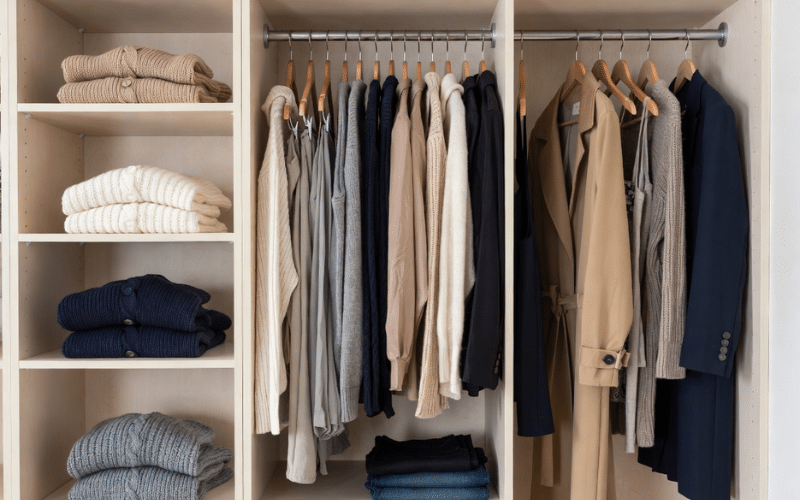
Before picking any single piece, the most important step is deciding on a color palette. This is the structural backbone of your capsule wardrobe for work, and getting it right means every item will naturally go with everything else. A practical approach is to anchor your palette in two or three neutrals , think navy, charcoal, camel, ivory, or black , and then add one or two accent colors that complement your skin tone and your industry.
- Classic neutrals: black, white, navy, grey, camel , all mix seamlessly.
- Accent colors: burgundy, forest green, rust, or dusty blue add personality without chaos.
- Avoid more than three accent colors in one capsule , the more colors, the fewer combinations you get.
- Consider your skin tone: warm undertones suit camel, olive, and rust; cool undertones work with navy, grey, and plum.
Once your palette is set, shopping becomes exponentially easier. You stop getting distracted by beautiful pieces that don’t actually work with anything you own.
The 10 Essential Pieces for Your Work Capsule Wardrobe
These are the wardrobe staples for the office that form the core of any professional capsule. Each piece has been chosen for maximum versatility, but the specific versions you choose should reflect your workplace dress code, body type, and climate.
1. A Tailored Blazer
A well-fitted blazer is arguably the hardest-working piece in any professional wardrobe. Choose one in a neutral tone , charcoal, navy, or camel , and prioritize fit above all else. The shoulder seam should sit exactly at your shoulder, and the jacket should skim the body without pulling. For petite frames, a cropped blazer creates the illusion of height; for broader shoulders, a single-button style with a notch lapel is more flattering than double-breasted options.
2. Well-Fitted Trousers or a Tailored Skirt
The right pair of trousers or a tailored skirt can anchor dozens of office outfit ideas on its own. Wide-leg trousers in a mid-weight fabric look polished on most body types and work across casual-smart and formal office environments. If you prefer skirts, a straight-cut midi in a neutral tone is the most versatile option. Hemline aside, the fit around the hips and waist matters most , anything too tight reads as unprofessional, while anything too loose looks unfinished.
3. A Crisp White or Ivory Shirt
A classic button-down shirt is a non-negotiable in a capsule wardrobe for work. White or ivory are the most versatile, pairing with literally every other piece in your capsule. Look for a poplin or Oxford weave for structure, and choose a cut that works with your build , a relaxed tuck-in silhouette tends to look intentional rather than sloppy. A well-ironed white shirt under a blazer with tailored trousers remains one of the most universally respected work outfits for women and men alike.
4. A Neutral Knit or Fine-Gauge Sweater
A fine-gauge crew-neck or V-neck sweater in merino wool or a wool blend is one of the most practical pieces you can own. It layers over a collared shirt, under a blazer, or works on its own. It keeps you comfortable in air-conditioned offices without compromising professionalism, and it travels exceptionally well , a major bonus for anyone who works across sites or travels for work.
5. A Polished Dress or Jumpsuit
A single-piece outfit like a sheath dress or tailored jumpsuit removes the need to coordinate tops and bottoms entirely. This is the piece you reach for on days when you need to look pulled-together but don’t have the mental bandwidth for outfit planning. Choose a silhouette that works for your proportions , A-line styles flatter most body types, while wrap dresses are particularly forgiving across different sizes.
6. Smart Dark-Wash Jeans (For Business Casual Environments)
If your workplace leans business casual, a pair of well-fitted dark-wash straight-leg jeans earns its place in your professional wardrobe essentials. The key is keeping them dark, structured, and free of distressing. Paired with a blazer and a clean sneaker or ankle boot, this combination threads the needle between approachable and professional with very little effort.
7. A Silk or Satin Blouse
A silk or satin blouse elevates any outfit instantly. Unlike a cotton shirt, the sheen and drape of a silk blouse communicates effort and refinement even when you’re wearing it with the simplest of trousers. Tuck it into high-waisted trousers or a skirt for a sleek, elongated silhouette, or wear it loose under a blazer for a slightly more relaxed professional look.
8. A Classic Trench Coat or Structured Outerwear
Your outerwear is the first thing people see and the last impression you leave. A classic beige trench coat or a structured wool overcoat in camel or charcoal pulls your entire capsule together. It works over everything , from a casual Friday look to your most formal office meeting outfit , and signals a level of intentionality that’s hard to fake with cheaper alternatives.
9. Quality Footwear in a Neutral Tone
Shoes carry an outfit. A pair of clean, classic heels, pointed-toe flats, or leather loafers in black, nude, or camel rounds out almost any work outfit without competing with your clothing. Comfort matters as much as aesthetics here , footwear you can’t walk in doesn’t serve a work wardrobe. If you’re on your feet all day, a quality leather loafer or block-heel pump gives you both comfort and polish.
10. A Structured Work Bag
While technically an accessory, a structured tote or work bag is as essential to your daily office outfit as any garment. Choose one in black, tan, or navy with a clean silhouette , no logos, no overly casual straps. A bag that holds a laptop, stays organized, and sits neatly on a desk communicates the same level of detail-orientation you bring to your work.
How to Get 30+ Outfits from These 10 Pieces
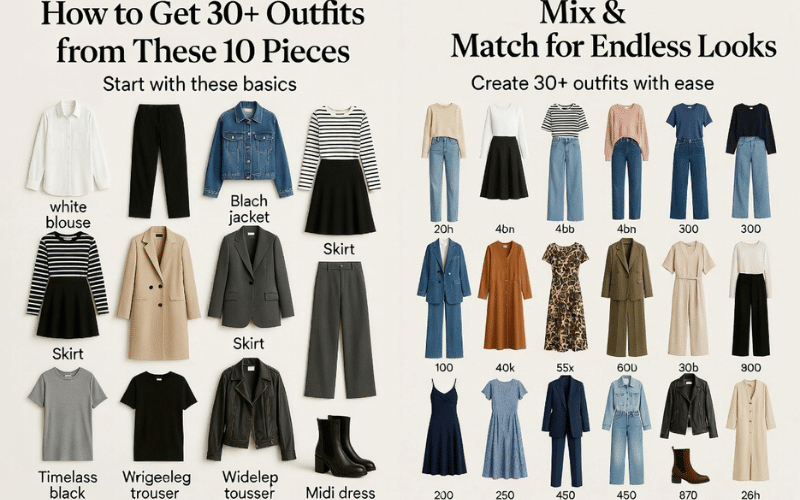
The true power of a minimalist work wardrobe lies in outfit layering and combination. Here’s how to think about it practically: your blazer works with the trousers, the jeans, the skirt, and the dress. Your white shirt works under the blazer, tucked into the trousers, or worn with the skirt. Your knit sweater can replace the blazer for a more relaxed day. Each combination creates a distinct look, and once you start seeing the system, getting dressed becomes a genuinely efficient process.
- Monday: Tailored trousers + white shirt + blazer + loafers (client meeting ready)
- Tuesday: Sheath dress + structured bag + heels (single-piece ease, full polish)
- Wednesday: Dark jeans + silk blouse + blazer + ankle boots (business casual elevated)
- Thursday: Midi skirt + fine-knit sweater + loafers (relaxed but refined)
- Friday: Trousers + silk blouse tucked in + trench coat (smart-casual weekend crossover)
Building This Wardrobe on Different Budgets
One of the most common misconceptions about building a work capsule wardrobe is that it requires a significant upfront investment. It doesn’t , but it does require a strategy. If your budget is limited, prioritize fit and fabric over brand name. A well-altered blazer from a high-street retailer will outperform an ill-fitting designer piece every time. Tailoring is the most underused tool in workwear planning, and even a small alteration budget can transform how your clothes look on your actual body.
Build your capsule over time rather than all at once. Start with the pieces you reach for most , typically trousers, a blazer, and two versatile tops , and add one new item per month. Secondhand shopping, particularly at curated vintage or consignment stores, is a genuinely excellent way to find quality fabrics and tailored cuts at a fraction of the retail price. With patience and intention, a well-rounded professional wardrobe is accessible at almost every price point.
Fabric Choices That Make the Difference
Fabric is what separates a capsule wardrobe that looks expensive from one that just looks like it’s trying to. For office wear, the goal is fabric that holds its shape across a full day, doesn’t wrinkle easily, and has enough visual weight to look intentional. Wool and wool blends, cotton poplin, ponte knit, and silk are the gold standard. Fabrics to approach with caution include thin polyester (which shows sweat and clings), linen (beautiful but extremely high-maintenance for a busy workday), and heavily synthetic blends that pill quickly.
Adjusting Your Capsule for Your Industry and Dress Code
A capsule wardrobe for work in a law firm looks different from one built for a creative agency or a tech startup. The core principles are the same , fit, quality, coordination , but the specific pieces shift. In formal environments, replace the dark jeans with a second pair of tailored trousers and swap the jumpsuit for a structured suit. In creative or casual workplaces, you have more room to introduce texture, color, and print as accent pieces without sacrificing professionalism.
The smartest move is to understand the unspoken dress code of your workplace , not just what’s allowed, but what earns respect. Dressing slightly above the norm of your environment rarely hurts; dressing significantly below it often does. Your capsule wardrobe for work should reflect where you are and where you’re heading professionally.
Maintaining and Refreshing Your Capsule Over Time
A capsule wardrobe isn’t a one-time project , it’s an ongoing practice. At the start of each season, review each piece: Does it still fit well? Is it in good condition? Does it still serve your current role and lifestyle? Items that no longer serve you should be donated, altered, or replaced. Replacing one or two pieces per season with something slightly elevated keeps your wardrobe feeling fresh without breaking the discipline of a minimalist approach.
Investing in proper care , using a steamer instead of an iron where possible, dry-cleaning wool and structured pieces, and storing blazers on proper hangers , extends the lifespan of every item significantly. The longer your pieces last, the more cost-effective and sustainable your capsule becomes.
Final Thought: Less Really Is More
Building a 10-piece capsule wardrobe for work is less about restriction and more about intention. When you dress with a system rather than impulse, you arrive at work feeling more prepared, more confident, and significantly more at ease. The goal was never to have fewer clothes , it was to have the right clothes, ones that work as hard as you do and show it. Start with what you have, identify the gaps, fill them thoughtfully, and let your wardrobe become one less thing you have to think about.