

The most effective way to add curves to a rectangle body shape is to create the illusion of a waist by adding volume at the bust and hips while cinching or defining the middle. Peplum tops, A-line skirts, ruffled details, belted dresses, and strategic layering all work together to give the silhouette the shape and dimension that a naturally straight figure lacks.
Understanding the Rectangle Body Shape
A rectangle body shape, sometimes called a straight or banana body type, is defined by shoulders, waist, and hips that are roughly the same width. There is little to no natural waist indentation, the bust tends to be smaller or proportional without much curve, and the body carries weight evenly without concentration in any single area.
This shape is extremely common and has a natural athletic quality to it. The styling challenge is not about covering anything up — it is about adding definition where definition does not naturally exist. Understanding why fit categories exist in fashion helps clarify why so many standard cuts, which are designed around a defined waist, can feel like they are swamping or bypassing a rectangle figure entirely.
The good news is that creating the appearance of curves is entirely achievable through silhouette choices, color placement, fabric texture, and detail positioning. Once you understand the logic, you can apply it to almost anything in your wardrobe.
Create a Waist With Belts and Cinching
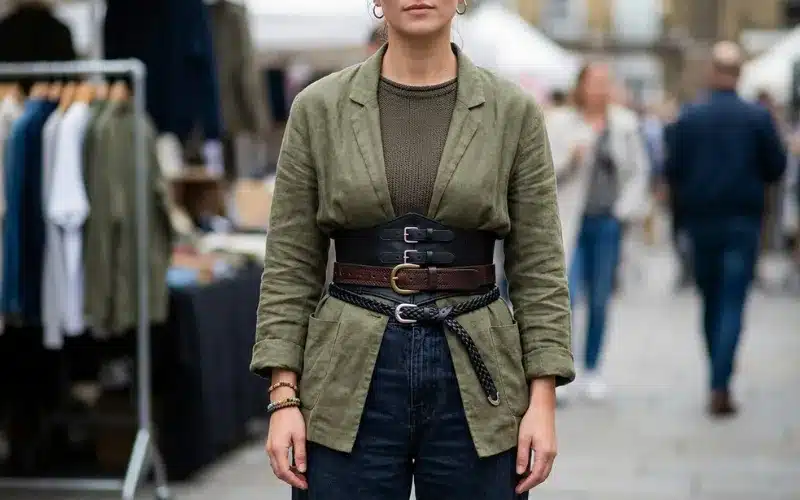
The single most impactful thing a rectangle body shape can do is manufacture a waist. Since the natural waistline does not pull in significantly on its own, the goal is to use clothing details and accessories to create that indentation visually.
Belts are the most direct tool for this. A wide belt worn at the narrowest point of the torso, even if that point is only slightly narrower than the hips and shoulders, immediately creates a before-and-after effect that transforms a straight silhouette into something that reads as curved. A wide statement belt in a contrasting color is especially effective because it draws the eye to the waist as a deliberate focal point.
Beyond belts, look for clothing that incorporates:
- Drawstring waists that can be pulled in to create definition
- Elasticated waistbands on dresses and skirts that gather fabric at the center
- Wrap-style closures that naturally cinch as they tie
- Ruching or gathering at the side seams through the waist area
- Seaming that curves inward at the waist rather than falling straight
Wrap dresses and wrap tops are among the best ready-made options for rectangle shapes because the act of wrapping and tying the garment creates waist definition without any additional effort.
Tops That Add Volume and Shape to the Upper Body
For a rectangle body shape, the upper body is a prime location to build visual curve. Adding volume, texture, or structural interest at the bust and shoulders makes the waist look narrower by comparison, even if the waist itself has not changed.
Tops that work best for adding curves on top include:
- Peplum tops with a flare that begins at the waist and fans outward, creating hip-like volume
- Ruffled or tiered blouses that add dimension across the chest and bust
- Off-the-shoulder tops that widen the shoulder line and add presence to the upper body
- Tops with embellishment, pockets, or bold prints concentrated at the chest level
- Wrap tops that create diagonal lines across the bust and gather at the waist
Styling a white button-down shirt in creative ways is one of the most versatile approaches for rectangle shapes. Knotted at the front hem to create a defined waist, layered open over a fitted camisole, or tucked asymmetrically into a full skirt, a single button-down can create very different silhouette effects depending on how it is worn.
Avoid very fitted, plain T-shirts and thin-strapped tops without any structural detail. These follow the straight line of the body too closely and do nothing to add the dimension you are looking for.
Skirts That Build Hip Volume
The hip area is the second key location for adding curves to a rectangle body shape. A skirt that adds volume at the hips creates the lower half of the hourglass illusion, and when paired with a defined waist, it makes the figure look dramatically more curved.
Skirts that build hip volume include:
- Full A-line skirts that flare generously from the waist
- Circle skirts in stiff or structured fabrics that hold their shape
- Pleated skirts with box or knife pleats that add volume at the front of the hips
- Tiered skirts where each layer adds dimension and movement
- Gathered midi skirts in voluminous fabrics
The fabric choice matters as much as the silhouette here. A stiff cotton or structured taffeta holds the volume of a full skirt outward, creating a clear shape. A very soft jersey will collapse against the body and lose the curve-building effect. For everyday options, a silk dress design or structured midi skirt in a fabric with some body gives both elegance and silhouette.
Pair a full skirt with a fitted or tucked-in top to maximize the contrast between the waist and hip area. This contrast is exactly what creates the illusion of curves.
Dresses That Do the Work for You
Choosing the right dress style is one of the most efficient moves for a rectangle body shape because a well-chosen dress builds all the necessary details into a single piece. You don’t have to think about pairing a top that adds volume to the right skirt. The dress does the silhouette work for you.
The best dress styles for rectangle body shapes include:
- Fit-and-flare dresses with a structured bodice and a full, flared skirt
- Wrap dresses that tie at the waist and create both a V-neckline and a defined mid-section
- Peplum dresses or dresses with a peplum layer at the hip
- Skater dresses with a fitted top and a short, flared skirt
- Bodycon dresses with strategic ruching at the sides of the waist
For formal occasions, long gown styles with full skirts are among the most dramatic curve-creating options. A structured ballgown silhouette gives the impression of a dramatically nipped waist and full hips even on the straightest figure. The contrast created by a boned or fitted bodice against a voluminous skirt is one of fashion’s most powerful optical tricks.
Empire-waist dresses are generally not the strongest choice for rectangle shapes because they draw attention to the area just below the bust rather than the natural waist, and they tend to fall straight from there rather than creating hip volume. The exception is an empire dress with a full, gathered skirt, which at least adds volume at the lower half.
Strategic Color and Pattern Placement
Color and print are among the most underestimated tools in the rectangle body shape styling kit. The way color and pattern are placed across the body directly influences where the eye travels and how much volume each area appears to have.
To build the illusion of curves with color and pattern:
- Wear darker colors through the waist and lighter or brighter colors at the bust and hips to create contrast
- Use bold prints or patterns at the hip level, on skirts, and on wide-leg trousers to add visual width
- Choose tops with horizontal stripes or large-scale prints to add presence to the upper body
- Wear color-block dresses that use lighter shades at the bust and hips with a darker panel at the waist
Understanding the best color combinations for dresses goes well beyond aesthetic preference. For rectangle shapes, color placement is a functional tool that actively reshapes the visual silhouette. A dress with a dark center panel and lighter side panels, for example, creates a waist indentation purely through color contrast.
Avoid wearing head-to-toe plain dark colors in matching tones without any break at the waist. While this is slimming for some body types, for rectangle shapes it reinforces the straight vertical line rather than adding any curve definition.
Layering to Add Dimension
Layering gives rectangle body shapes a significant advantage because it allows you to add texture, volume, and structure at specific points without committing to a single garment. The right layering combination can build curves into an otherwise flat silhouette.
Effective layering approaches for rectangle shapes:
- A cropped jacket or blazer over a full skirt: the crop emphasizes the waist transition while the skirt adds hip volume
- An open duster coat over a belted dress: the duster creates vertical length while the belt maintains waist definition underneath
- A tucked-in blouse with a structured outer layer left open: the tuck creates waist definition while the open layer adds softness around it
A short jacket style worn over a dress or skirt is one of the most effective layering combinations for rectangle shapes. The jacket ends at the waist and draws the eye to that transition point, while the skirt or dress visible below adds the lower-body volume that creates the curve effect.
Jeans and Trousers That Help
Denim and trouser choices significantly affect how curved the lower body appears. For rectangle shapes, the goal with bottoms is to add volume and shape at the hip and thigh area rather than following the straight line of the legs.
Trouser and jean styles that add curves:
- Wide-leg trousers with a high rise that sits at the natural waist, adding volume through the hip and thigh
- Flared jeans and bootcut denim that add width from the knee down, creating a curve by contrast
- Trousers with pocket flaps, belt loops, or hip detailing that add visual interest and dimension at hip level
- Paperbag-waist trousers that gather at the waist and create a soft fullness at the hip
A well-chosen pair of wide-leg trousers paired with a fitted, tucked-in top is one of the most reliable curve-creating formulas for rectangle shapes. It requires minimal accessories and works across casual everyday wear through to smart-casual occasions.
Avoid very slim, straight-cut trousers in plain dark tones worn with equally plain dark tops. This combination reinforces the rectangle silhouette by creating an unbroken straight line from shoulder to ankle.
Fabrics and Textures That Add Body
For rectangle shapes, fabric texture is a powerful but often overlooked tool. Textured fabrics add visual dimension to the surface of the clothing, which translates into the appearance of more shape underneath.
Fabrics that add dimension for rectangle shapes:
- Tweed, boucle, and thick knits that add physical volume and visual interest
- Lace overlays that create texture without excessive bulk
- Structured cotton and poplin that hold a shape rather than falling straight
- Velvet, which has a light-catching quality that creates shadow and depth on the surface
- Broderie anglaise and embroidered fabrics that add dimension through surface detail
For warmer seasons, breathable eco-friendly fabrics like textured linen and bamboo blends offer both comfort and natural structure that works well for rectangle shapes.
Avoid very thin, slippery fabrics that drape flat against the body without any volume. These tend to make the straight silhouette even more apparent.
Building a Curve-Friendly Capsule Wardrobe
Rather than approaching each outfit individually, building a wardrobe around a few reliable silhouettes makes daily dressing far more consistent. A well-structured capsule wardrobe for work or everyday life built around rectangle body shape principles gives you a foundation that always works.
A strong starting capsule for rectangle shapes includes:
- One wrap dress in a versatile color or print
- One full A-line midi skirt in a structured fabric
- Two fitted or ruched tops to pair with the skirt
- One wide-leg trouser in dark denim or a neutral tone
- One peplum blouse or ruffled top
- One wide belt in a contrasting color
- One cropped blazer or jacket in a neutral
These pieces create multiple outfit combinations and all work together to build the waist-and-hip illusion that curves the rectangle silhouette. For those starting from scratch, a minimalist wardrobe built with intention around these core pieces is far more effective than a large, random wardrobe where nothing quite works the way you hoped.

Common Mistakes Rectangle Shapes Make
Even with the best intentions, certain habits consistently flatten the rectangle silhouette further rather than adding curves.
Wearing matching-tone separates with no waist break. A top and bottom in the same color without any belt or definition at the waist creates an unbroken vertical line that emphasizes the straightness of the figure.
Avoiding volume out of fear of looking bigger. Many rectangle-shaped women skip full skirts or ruffled tops because they worry about looking larger. In reality, strategic volume at the right places creates the contrast that reads as curves.
Choosing very relaxed, oversized fits across the whole outfit. Oversized pieces worn together with no fitted element remove any chance of waist definition and make the entire body look boxier.
Skipping the belt. A belt is the quickest single fix for a rectangle silhouette. Not wearing one at all is a missed opportunity in almost every outfit.
Wearing very long, straight tops over slim trousers. This is the rectangle body shape’s most common default and also its most silhouette-flattening combination. Break it up by tucking in the top, adding a belt, or switching the trousers to a flared or wide-leg cut.
FAQ
What is a rectangle body shape
A rectangle body shape is one where the shoulders, waist, and hips are roughly the same width, creating a straight, balanced silhouette without a naturally defined waist. It is also called a straight or banana body type and is one of the most common body shapes among women.
How do you add curves to a rectangle body shape
The most effective ways to add curves are to cinch the waist with a belt or wrap-style garment, add volume at the bust with ruffles or structured tops, and add hip volume with full A-line or pleated skirts. Strategic color placement and fabric texture further enhance the illusion of curves.
Are wrap dresses good for rectangle body shapes
Yes. Wrap dresses are one of the best options for rectangle body shapes because the wrap closure creates a V-neckline and a tied, cinched waist in a single garment. They add definition at the middle while allowing the skirt portion to create some hip volume, making them a reliable curve-enhancing choice.
What jeans suit a rectangle body shape
Wide-leg, flared, and bootcut jeans are the most flattering for rectangle body shapes. These cuts add volume at the hip and thigh area or from the knee down, creating visual width that reads as a curved lower body. Pair them with a fitted, tucked-in top to maximize the waist contrast.
Should rectangle shapes wear horizontal stripes
Yes, horizontal stripes are actually beneficial for rectangle body shapes, unlike for pear or apple shapes. Wearing them across the bust or hip area adds visual width at those points, creating the contrast that makes the waist appear more defined. Avoid wearing them through the entire outfit without any waist definition.
What dress length looks best on rectangle body shapes
Midi-length dresses and short fit-and-flare styles both work exceptionally well. A midi length creates elegance and elongates the leg, while a short fit-and-flare adds visible contrast between a fitted bodice and a flared skirt. The length matters less than the silhouette: any dress that defines the waist and adds volume at the hips will flatter the rectangle body shape.